Lifestyle • • 7 min
The Hidden Causes Of Hair Fall Nobody Talks About
For years, hair fall has been blamed on genetics. But among urban professionals in Gurugram, a different pattern is emerging — one driven by invisible lifestyle and environmental stressors that get far less attention. And many of them begin at the scalp.
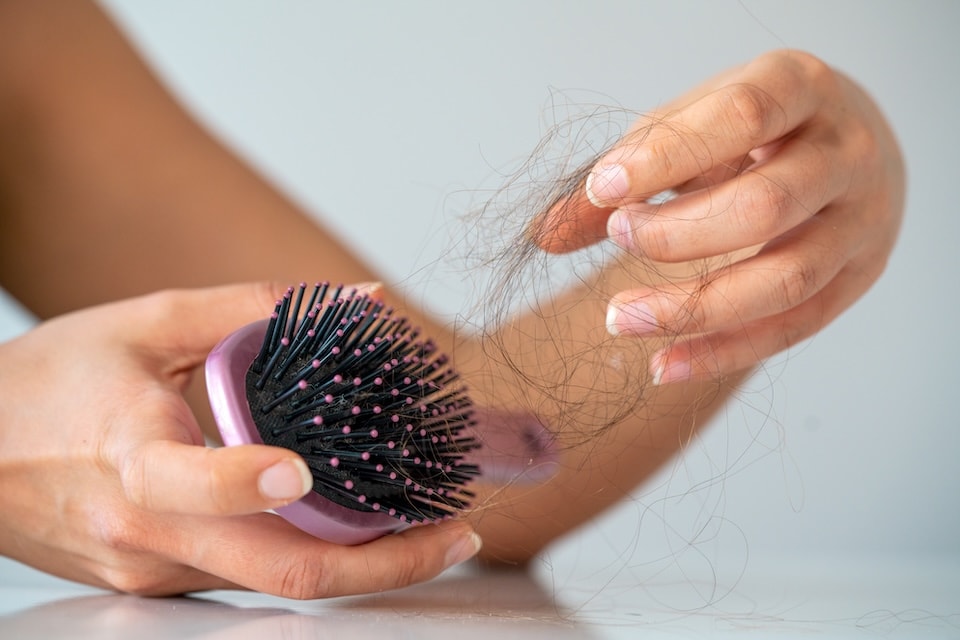
For years, hair fall has been blamed on genetics. When shedding increases, most people look first toward family history, vitamin deficiencies, hormones, or age. And those factors matter. But across Gurugram's affluent communities, a different pattern is emerging.
People in their late twenties, thirties, and early forties are reporting excessive shedding, thinning density, scalp sensitivity, persistent dandruff, and scalps that are oily yet irritated — despite premium shampoos, expensive salon treatments, supplements, and luxury haircare routines.
The uncomfortable truth is that many modern hair concerns are being driven by invisible lifestyle and environmental stressors that receive far less attention than genetics. These aren't theories or marketing claims. They are physiological realities. And many of them begin at the scalp.
The Premium Haircare Trap
One of the most overlooked causes of scalp dysfunction among affluent consumers is product accumulation. Modern routines often layer scalp serums, styling sprays, dry shampoos, leave-in conditioners, volumisers, and heat protectants — and individually, none of these is necessarily harmful.
The issue is accumulation. Over time, residue combines with sebum, dead skin cells, pollution particles, and hard-water minerals to form a layer that sits directly on the scalp surface. Many people mistake the symptoms — an itchy scalp, greasy roots soon after washing, recurring flakes, an unpleasant odour, more shedding during washing — for other conditions entirely.
The hard truth is that the people spending the most on haircare can end up creating the greatest scalp burden. More products do not automatically create healthier hair. Sometimes they create the opposite.
The Scalp Tension Nobody Considers
Golf Course Road has become synonymous with high performance — and high performance often creates chronic muscular tension. Many professionals spend ten to fourteen hours on screens, long stretches in meetings, frequent travel, and constant high-pressure decisions. The result is jaw clenching, neck tightness, shoulder restriction, and scalp tension.
Few people realise the scalp contains a network of muscles, fascia, blood vessels, and connective tissue. When circulation there is compromised, oxygen delivery decreases, nutrient delivery weakens, and recovery slows. Korean scalp physiologists have long treated scalp mobility and circulation as foundations of healthy hair growth.
The hard truth is that many professionals invest heavily in cosmetic haircare while unknowingly carrying chronic scalp tension every day. A scalp held under constant physiological stress cannot function optimally — and that tension may quietly reduce circulation to the follicles.
The Overheating Scalp
Heat is becoming a hidden scalp stressor. A modern Gurugram routine exposes the scalp to repeated heat sources: hot showers, hair dryers, styling tools, direct sunlight, vehicle heat, and gym sweat. Research into scalp sweating and cortisol points to a strong physiological link between stress responses and scalp condition.
Excess heat may contribute to irritation, barrier disruption, increased oil production, microbial imbalance, and oxidative stress. And here's a common misread: many people assume an oily scalp signals healthy hydration, when often it's compensation — the scalp producing excess oil in response to repeated environmental stress.
The hard truth is that the scalp was never designed to exist under constant thermal stress, yet modern life exposes it to heat almost every day.
The Air-Conditioning Paradox
This may be the most relevant factor of all for Gurugram's affluent population. Most luxury residences, offices, cars, clubs, and commercial spaces run on continuous air-conditioning — and while it improves comfort, it changes the scalp environment dramatically.
Extended exposure may contribute to moisture loss, barrier disruption, increased sensitivity, and surface dehydration. With eight to twelve hours in office AC, more time in vehicles, and evenings in climate-controlled homes, the scalp lives in a persistently low-humidity environment. It often responds through imbalance — some scalps becoming excessively dry, others excessively oily as they try to compensate.
The result is usually confusion: people keep changing products without ever addressing the environment itself. The hard truth is that luxury comfort frequently creates biological stress no one associates with hair health. The environment surrounding your scalp matters as much as the products touching it.
When The Scalp Microbiome Loses Balance
The scalp is an ecosystem. When balanced, it helps regulate oil production, inflammation, barrier protection, and follicle health. But modern urban life constantly disrupts that balance — through pollution, aggressive shampoos, over-washing, heavy dry-shampoo use, and chronic stress.
Once imbalance sets in, people often experience persistent dandruff, oily roots, scalp sensitivity, recurring irritation, and unexplained shedding. The hard truth is that many luxury haircare products focus on cosmetic appearance while ignoring microbiome health entirely. A scalp that looks clean is not necessarily a healthy scalp.
Inflammation, The Silent Trigger
One of the biggest misconceptions in haircare is that hair fall begins with the strand. In reality, it often begins with scalp inflammation — the body's response to irritation, stress, environmental overload, or imbalance. The difficulty is that scalp inflammation is frequently invisible.
Many people assume inflammation only exists when there's redness, severe itching, or pain. In reality, low-grade inflammation can stay active for months without dramatic symptoms, and over time it may shorten growth cycles, weaken follicle attachment, increase shedding, and reduce follicular efficiency. Dermatology increasingly recognises chronic, low-grade inflammation as a meaningful contributor to progressive thinning.
The hard truth is that many professionals focus heavily on external haircare while ignoring the biological environment supporting the follicle itself. Healthy follicles require a healthy scalp ecosystem — without it, even premium products tend to produce only temporary results.
The Gurugram Reality
The modern scalp is under pressure from several directions at once — chronic stress, pollution, hard water, product overload, environmental heat, climate-controlled spaces, and poor recovery cycles. Most people notice only when density begins to change. By then, the scalp has often been signalling distress for months.
Which is why hair fall in affluent urban communities is increasingly a lifestyle matter rather than a purely genetic one. The future of hair wellness isn't reactive treatment after visible loss. It's early detection, scalp analysis, and preventive care — and the understanding that healthy hair begins long before a strand falls.
At MoArae, scalp wellness is approached through the Korean belief that healthy hair begins beneath the surface, working with the scalp's natural cycles rather than against them. The most telling causes of hair fall are often the ones nobody talks about: the quiet, invisible conditions affecting the scalp every day. Because healthy hair begins long before a strand falls.
Download the full report
This is a condensed look at a deeper analysis. The complete Gurugram Executive Wellness Report goes further — with the full breakdown of each hidden cause and the Korean scalp-first approach to addressing them.
Frequently asked questions
- Why might hair fall not be genetic?
- Increasingly, early hair fall reflects lifestyle and environmental stressors rather than family history alone — product buildup, scalp tension, heat, air-conditioning, microbiome imbalance, and low-grade inflammation. These appear in the scalp environment first, which is why a scalp-first assessment often reveals what a strand-focused approach misses.
- Can using too many haircare products cause hair fall?
- Layering serums, dry shampoos, sprays, and leave-ins can leave residue that combines with sebum, pollution, and hard-water minerals into a layer sitting on the scalp. That buildup can congest follicles and contribute to shedding — so more products don't automatically mean healthier hair.
- How does scalp inflammation cause thinning?
- Low-grade inflammation can stay active for months with no obvious redness or pain, gradually shortening growth cycles, weakening follicle attachment, and reducing follicular efficiency. Calming the scalp environment is central to supporting healthier hair over time.
Related reading
More from the Journal beyond “The Hidden Causes Of Hair Fall Nobody Talks About”
- Your Hair Fall Might Not Be About Your Hair At All
Hair fall may begin beneath the surface. Discover how stress, poor sleep, pollution and hard water can disrupt scalp health — and how Korean scalp wellness helps restore balance for healthier-looking hair.
- The Korean Scalp Detox Guide
The oily roots, the sudden flaking, the scalp that feels heavy by evening — most people notice the symptoms long before they understand the cause. Here is the Korean scalp detox ritual that resets a city-stressed scalp, physiologically rather than cosmetically.