Rituals • • 7 min
The Korean Scalp Detox Guide
The oily roots, the sudden flaking, the scalp that feels heavy by evening — most people notice the symptoms long before they understand the cause. Here is the Korean scalp detox ritual that resets a city-stressed scalp, physiologically rather than cosmetically.
The oily roots. The sudden dandruff. Hair that feels heavier, weaker, thinner, duller. A scalp that feels uncomfortable by evening. Most people notice the symptoms long before they understand the cause.
In cities like Gurugram, where pollution, stress, hard water, air conditioning, sweat, dust, long hours, and burnout have become part of everyday life, scalp congestion is increasingly common among high-performing professionals. Modern urban living creates buildup faster than most scalps can naturally recover from.
This is where Korean scalp wellness approaches the problem differently. Not cosmetically. Physiologically.
What Scalp Buildup Really Is
Most people assume shampoo removes everything. It does not. Over time, the scalp accumulates invisible layers of pollution particles, sweat residue, excess sebum, hard-water minerals, dead skin cells, styling-product residue, and environmental toxins.
The result isn't always immediately visible. Sometimes the scalp simply feels heavier, oilier, itchier, tighter, more sensitive. Other times the signs become obvious: flaking, irritation, thinning, clogged follicles, increased shedding.
A congested scalp functions differently. Circulation weakens, follicles become stressed, and the scalp microbiome turns unstable — and eventually the quality of hair growth begins to decline. The hair is not the first thing struggling. The scalp is.
The Modern Gurugram Scalp
Urban professionals often experience what Korean scalp specialists describe as a "fatigued scalp environment" — a scalp trapped between dehydration, inflammation, congestion, and oil imbalance. It's why so many in the NCR experience an oily scalp and dry hair at the same time. A handful of everyday forces drive it:
- Hard water. Mineral-heavy water leaves residue on the scalp surface, disrupting moisture balance and increasing flaking.
- Air pollution. Daily exposure to NCR air creates microscopic buildup around follicles and along the scalp barrier.
- Stress and cortisol. Chronic stress raises oil imbalance, inflammation, and scalp sensitivity.
- Indoor air conditioning. Constant artificial cooling dehydrates the scalp while increasing reactive oil production.
- Overwashing and aggressive products. Many people unknowingly damage the scalp barrier while trying to clean it harder.
None of these is dramatic on its own. Together, over time, they reshape the scalp environment.
Why Korean Scalp Wellness Became Global
Korean beauty philosophy evolved around one principle: healthy beauty begins with healthy foundations. In skincare, that meant repairing the skin barrier before applying anything cosmetic. In scalp wellness, the logic is identical.
Healthy hair begins with scalp balance, circulation, hydration, and a sound follicle environment — not temporary cosmetic masking. The Korean approach favours restoration rituals over quick fixes, treating the scalp as a living ecosystem that needs consistent nourishment rather than aggressive intervention.
The goal is not simply cleaner hair. The goal is a healthier scalp ecosystem — and it's this scalp-first thinking that has since become the foundation of modern hair-health protocols worldwide.
The Korean Scalp Detox Cycle
At its heart, the ritual is a five-stage restoration designed to reset, rebalance, and revitalise the scalp ecosystem.
- Stage 1 — Deep scalp cleansing. Removing residue, excess oil, pollution particles, and follicle congestion so the scalp surface can breathe efficiently again.
- Stage 2 — Steam therapy and softening. Controlled steam softens hardened buildup, opens the scalp surface gently, and improves absorption without harsh heat.
- Stage 3 — Circulation activation. Massage, pressure-point work, and tension release restore microcirculation and follicle vitality.
- Stage 4 — Hydration and barrier restoration. Rebalancing moisture, calming sensitivity, and strengthening the barrier to prevent reactive oil overproduction.
- Stage 5 — Maintenance rituals. Monthly detox, seasonal resets, and scalp-focused home care to hold results preventively rather than reactively.
The principle behind it is simple: the healthiest scalps are maintained consistently, not repaired only in crisis.
The Cleansing Rituals Most People Overlook
Luxury scalp wellness isn't only about products. It's about the rituals that turn daily care into lasting results — and a few of them rarely get the attention they deserve.
The first is double cleansing. Much like Korean skincare, scalp specialists favour layered cleansing — an oil-based pre-cleanse followed by a gentle foam — to lift buildup without stripping the barrier. The second is scalp-first washing: most people clean the lengths first, but Korean wellness prioritises the scalp before the strands, because follicles determine long-term hair quality.
Then there's temperature awareness — very hot water worsens dryness, inflammation, and oil imbalance, while balanced temperatures support comfort and barrier health — and massage-based cleansing, where intentional massage improves circulation and cleansing efficiency far more gently than aggressive scrubbing, which only creates micro-irritation. Your scalp absorbs what your city produces; protection begins with awareness.
Why Steam Therapy Feels So Transformational
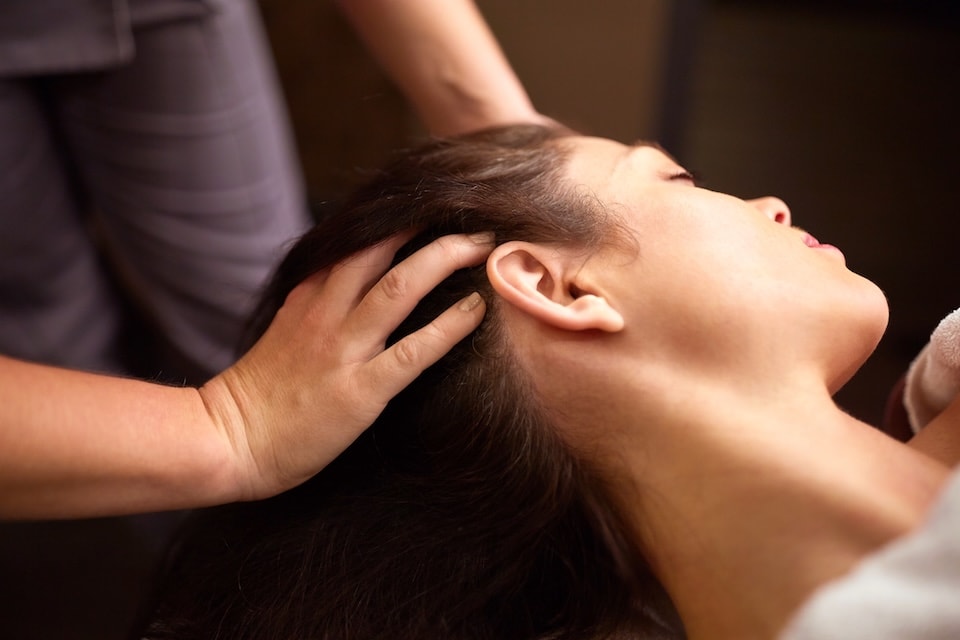
Many people are surprised by how emotional scalp relaxation can feel. Most of us carry real tension in the scalp, jaw, neck, and shoulders without realising it. Steam therapy paired with scalp massage creates warmth, circulation, release, and a genuine settling of the nervous system.
For a busy professional, it can become one of the few moments in the month when the body truly slows down. The combination of heat, touch, and intentional care creates a restorative pause that reaches well beyond surface-level beauty.
This is one reason Korean scalp wellness increasingly overlaps with luxury wellness culture. It's no longer viewed simply as beauty care. It is restoration — a practice that honours the connection between scalp health, mental clarity, and overall wellbeing.
When Stress Settles In The Scalp
Stress changes the scalp in ways most people never connect to hair health. It disrupts oil production, raises inflammation, heightens sensitivity, reduces circulation, and accelerates shedding cycles.
The effect is often delayed. A demanding month can trigger sudden flaking, increased hair fall, irritation, and oil imbalance weeks later. The scalp registers lifestyle pressure remarkably quickly — but the visible consequences tend to arrive on a delay.
Seen this way, scalp wellness becomes part of intelligent self-care rather than vanity. Professionals who invest in regular scalp restoration aren't indulging; they're protecting one of the body's most responsive and vulnerable ecosystems from the cumulative effects of modern life.
The MoArae Philosophy
The conversation around hair is shifting. The most discerning clients no longer ask which shampoo to use — they ask what condition their scalp is actually in, how much buildup sits beneath the surface, and whether their environment is quietly affecting their follicles. The direction of modern hair wellness is proactive scalp intelligence: understanding the scalp as a living ecosystem that communicates its needs long before visible hair fall begins.
At MoArae, scalp wellness is approached through the Korean belief that healthy hair begins beneath the surface. The focus isn't temporary cosmetic improvement; it's restoring what matters most — scalp balance, comfort, healthy circulation, deep cleanliness, and long-term follicle-environment health. This isn't a single service. It's a philosophy of care, with every protocol designed to work with the scalp's natural cycles rather than against them. For Gurugram's high-performing professionals, the earlier the scalp is supported, the better the long-term outcome.
Most people wait until hair fall becomes visible. But the flakes, the irritation, the oil imbalance, the sensitivity, the heaviness, the shedding — these aren't random inconveniences. They are signals. Because the scalp whispers long before it screams.
Download the full report
This is a condensed look at the thinking behind our rituals. The complete Korean Scalp Detox Guide goes further — with the full breakdown of each detox stage and a practical path to beginning your own scalp wellness journey.
Frequently asked questions
- What is a Korean scalp detox?
- A controlled, multi-stage ritual that dissolves pollution, hard-water minerals, sweat, sebum, and styling residue deep in the follicles, restores circulation, and rebuilds the scalp barrier — while preserving the scalp's natural balance rather than stripping it.
- Why doesn't shampoo remove scalp buildup?
- Ordinary shampoo clears surface oil but leaves behind deeper layers of mineral deposits, pollution particles, and product residue that accumulate over time. That buildup can congest follicles and weaken circulation, which is why a periodic deep detox matters.
- How often should you detox your scalp?
- Korean wellness favours consistency over crisis repair — typically a monthly detox supported by seasonal resets and scalp-focused home care, especially for urban professionals navigating pollution, hard water, and demanding schedules.
Related reading
More from the Journal beyond “The Korean Scalp Detox Guide”
- Scalp Intelligence: Why Korean Hair Wellness Starts Long Before Hair Fall
Korean scalp wellness begins before hair fall becomes visible. Discover how detoxification, circulation, barrier care and consistent monthly rituals help create a healthier environment for stronger-looking hair.
- The Hidden Causes Of Hair Fall Nobody Talks About
For years, hair fall has been blamed on genetics. But among urban professionals in Gurugram, a different pattern is emerging — one driven by invisible lifestyle and environmental stressors that get far less attention. And many of them begin at the scalp.